Navigating Non-Right Triangles
While the Pythagorean Theorem is perfect for right-angled triangles, the vast majority of triangles in mathematics and real-world engineering are "oblique" (meaning they do not contain a 90-degree angle). To solve for missing sides and angles in these shapes, mathematicians rely on two highly powerful trigonometric properties: The Law of Sines and The Law of Cosines.
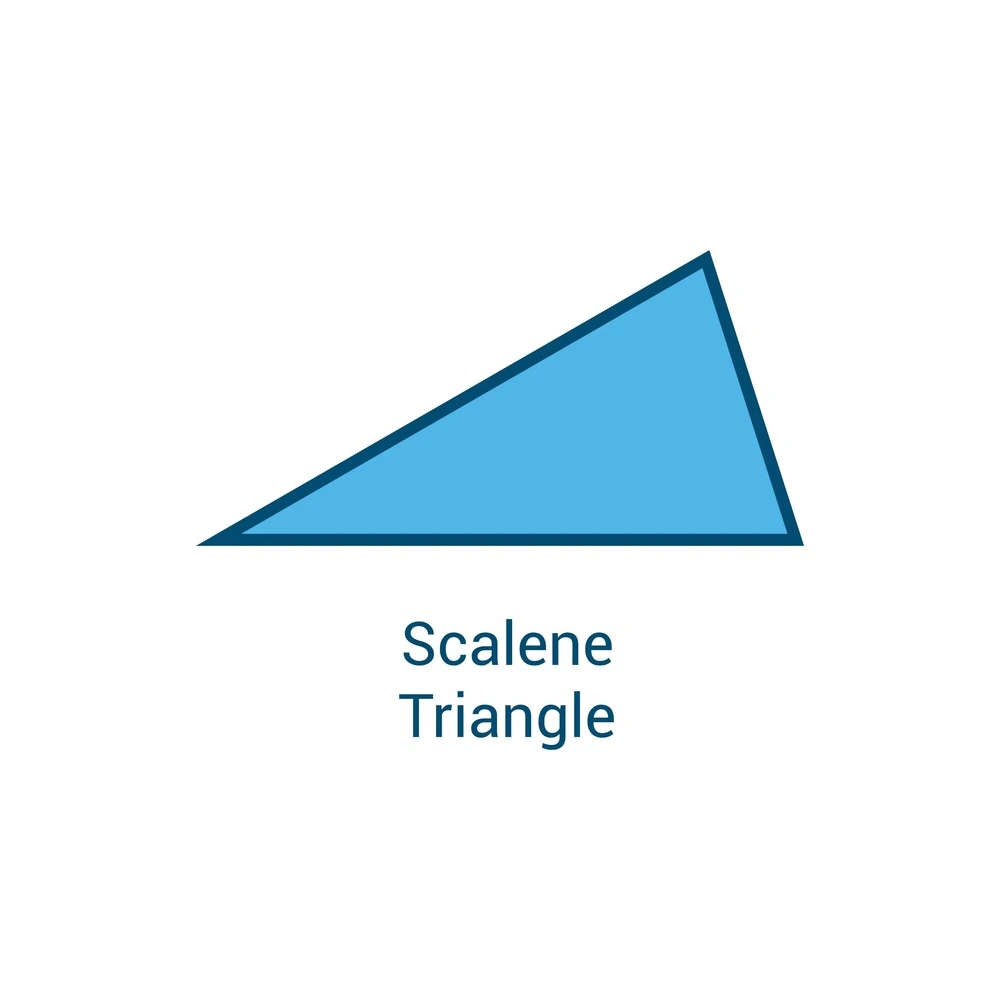
Before applying these laws, it is crucial to understand the standard geometric naming convention: capital letters (\( A, B, C \)) always represent the interior angles (usually measured in degrees), while lowercase letters (\( a, b, c \)) represent the lengths of the sides directly opposite those corresponding angles.
The Law of Sines
The Law of Sines establishes that the ratio of a side's length to the sine of its opposite angle is constant for all three sides of the triangle. It is written as:
\[ \frac{a}{\sin(A)} = \frac{b}{\sin(B)} = \frac{c}{\sin(C)} \]
You should deploy the Law of Sines when you are provided with either two angles and one side (AAS or ASA), or two sides and an angle strictly opposite one of them (SSA - the ambiguous case). By setting up a simple cross-multiplication algebra equation, you can quickly isolate the unknown variable.
The Law of Cosines
The Law of Cosines is essentially an expanded, more robust version of the Pythagorean theorem, adapted to account for the angle that deviates from 90 degrees. It is written as:
\[ c^2 = a^2 + b^2 - 2ab \cdot \cos(C) \]
This formula is your primary tool when you are given two sides and the included angle directly between them (SAS), or when you are given all three sides (SSS) and need to calculate the interior angles. It algebraically guarantees a single, definitive shape.